
Alamosa County Unclaimed Property
Unclaimed money in Alamosa County follows Colorado state law. The county treasurer, Lisa J. Tafoya, manages property taxes but refers unclaimed property matters to the state program. Residents of Alamosa and surrounding areas can search the Great Colorado Payback database to find funds. This free system holds money from forgotten bank accounts, uncashed checks, and other sources. The San Luis Valley has many properties listed in the state database waiting for owners to claim them.
Treasurer Office Contact
The Alamosa County Treasurer is at 501 Palmer Street, Suite 202, Alamosa, CO 81101. You can call 719-589-6391 during business hours. Lisa J. Tafoya also serves as treasurer for Delta County, a common arrangement in rural Colorado counties. The office handles property tax collection, motor vehicle registration, and related duties.
This office does not maintain a local unclaimed property database. All unclaimed funds go to the state after the required holding period. If you have questions about property taxes or tax lien sales, contact the treasurer directly. For unclaimed money, use the state system.
State Unclaimed Property System
Colorado law requires businesses to turn over unclaimed property to the State Treasurer. This happens when the owner cannot be found after a dormancy period. Most accounts become dormant after three to five years of no contact or activity. Once the state receives the property, they hold it indefinitely until claimed.
The Great Colorado Payback program manages all unclaimed property for Colorado. This includes funds from Alamosa County and every other county in the state. The database updates regularly as new property arrives. There is no charge to search or file a claim.
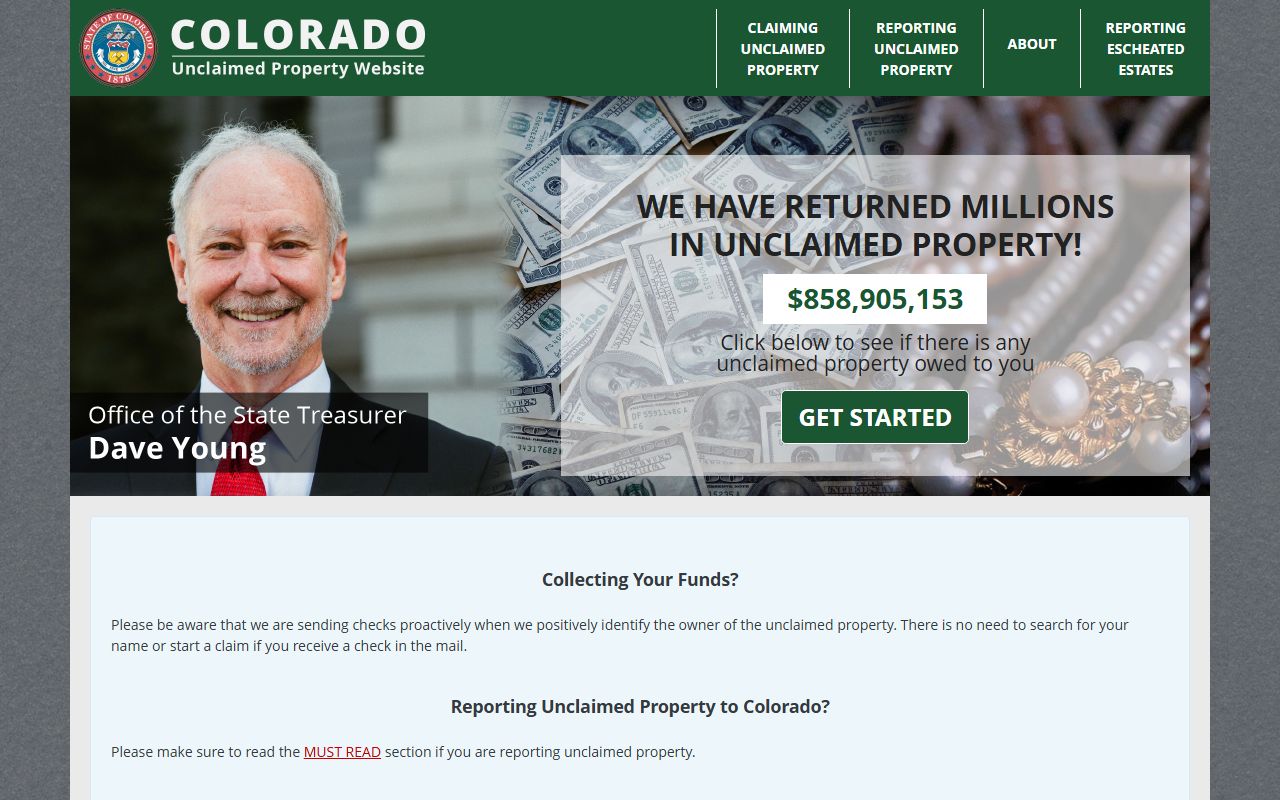
This is the official state portal for unclaimed money searches. Enter your name to see if any property is waiting. You can also search for deceased relatives or business names.
Common Sources of Unclaimed Funds
Bank accounts are the most frequent source. You move away and forget about a small balance. The bank tries to reach you. When they cannot, the account becomes dormant. After the waiting period, the bank sends the money to the state.
Utility deposits also turn into unclaimed property. You close an electric or gas account with a credit. The company sends a refund check to your old address. If you never cash it, that money goes to the state. Same with security deposits from landlords.
Insurance policies generate unclaimed funds when beneficiaries do not know about them. An older relative had a small life insurance policy. The company cannot find the family. The death benefit sits unclaimed until someone searches for it. Pension benefits work the same way.
Payroll checks, tax refunds, vendor payments, and stock dividends all become unclaimed if not cashed or claimed. Even small amounts add up. The state database has properties worth a few dollars and some worth thousands.
How to Search
Start with your full legal name. Try different versions if nothing comes up. Some records use your middle name, others just an initial. Maiden names and nicknames may also appear in the database. Search each variation to cover all possibilities.
Look at the city or address listed with each property. If it matches a place you lived or worked, that property is likely yours. Alamosa County residents may see listings for Alamosa, Del Norte, Monte Vista, or other local towns. Some might list old addresses in other counties if you moved around.
Business owners should search their company name. Unclaimed property can come from old vendor checks, customer refunds, or overpayments. If your business closed or changed names, try those old names too.
The state provides a Department of Property Taxation page for Alamosa County with tax information. This helps you understand local property tax matters but does not cover unclaimed funds.
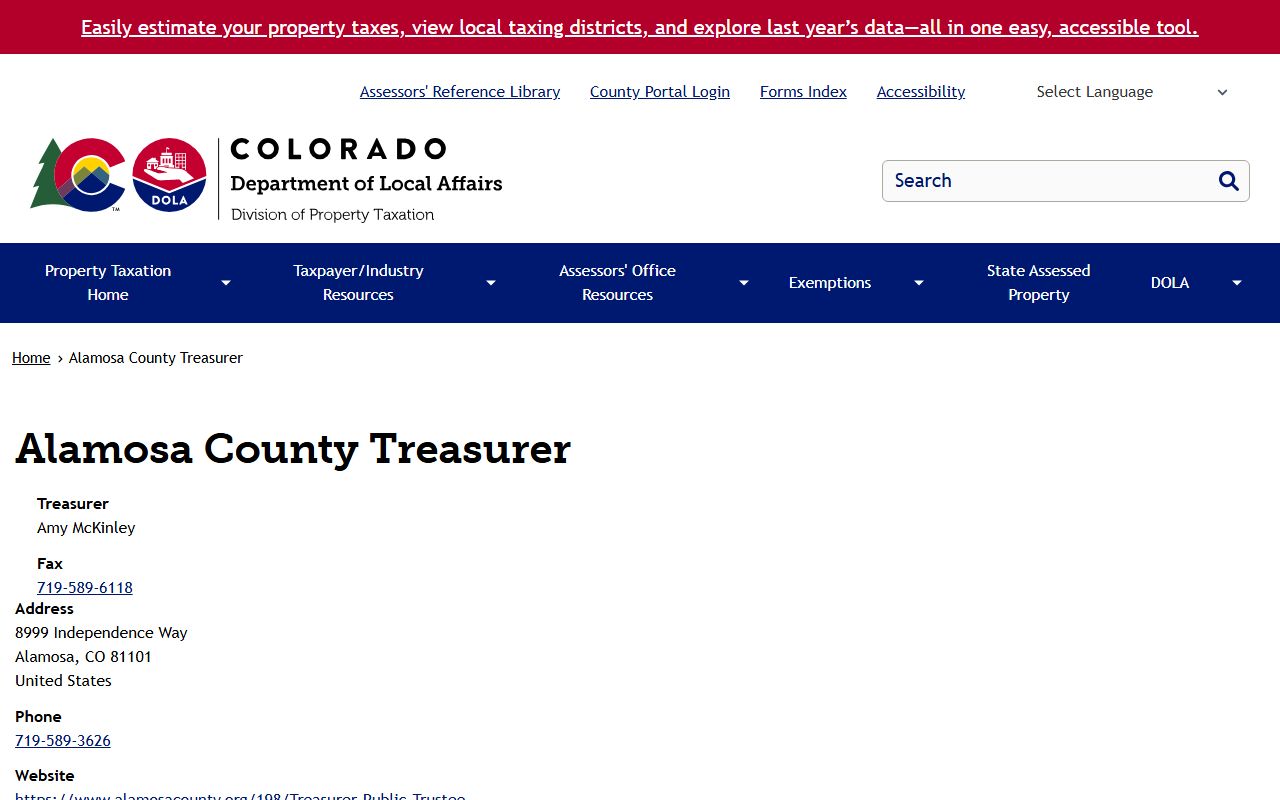
This page offers details about property assessment and tax administration in Alamosa County. It is a resource for understanding how local taxes work. For unclaimed property, you still need the state database.
Filing Your Claim
Once you find property, click on the listing to start a claim. The online form asks for your current contact information and proof of identity. Most claims need a copy of your driver's license or ID card. You might also provide an old address document like a utility bill to show you lived where the property was held.
Small amounts usually process without much documentation. Larger claims require more proof. The state wants to make sure the money goes to the right person. If they need additional information, they will contact you by mail or email.
Processing times vary. Simple claims with clear documentation may complete in a few weeks. More complex claims take longer. The state handles claims in order, so there may be a wait depending on volume. You can check claim status online using the reference number from your submission.
Payment comes by check or direct deposit. You choose the method when filing. Checks arrive by mail to the address you provide. Direct deposit goes into the bank account you specify. Either way, there is no fee. The state does not charge to return your money.
Legal Framework
Colorado adopted the Uniform Unclaimed Property Act, which sets the rules for how property becomes unclaimed. The law defines dormancy periods for different types of property. It also explains the duties of holders, the state's role, and the rights of owners.
Holders must make a diligent effort to find owners before reporting property to the state. This includes sending notices to the last known address. If the owner does not respond, the holder files a report with the state and remits the funds.
The state publishes lists of unclaimed property owners. These lists appear in newspapers and online. The goal is to reunite people with their money. Even if you do not see a notice, you can search any time. The property remains available forever.
San Luis Valley Resources
Alamosa County sits in the San Luis Valley, a rural region in southern Colorado. Residents here may have limited internet access. Public libraries offer free computer use for searching the state database. The Alamosa Public Library and other local branches provide this service.
If you need help with a claim, contact the state treasurer's office at 303-894-2443. Staff can answer questions about the process. They cannot help you search, but they explain what documents you need and how to submit a claim.
Legal aid organizations in Colorado assist with various financial matters. If your claim is complex, you might consult a local attorney. Most claims are straightforward and do not require legal help. Use common sense and follow the instructions on the website.
Protecting Yourself
Scams are common in the unclaimed property world. You get a letter saying you have money waiting. It asks for a fee to process the claim. This is fraud. The state never charges to claim your property. You can do it yourself for free.
Some companies offer claim services for a percentage of the recovered funds. These are legal but often unnecessary. You can file the same claim without help. If you do use a service, read the contract carefully. Make sure they do not take too large a share.
Never give out your Social Security number or bank details to someone who contacts you first. The state will ask for information when you file a claim, but they do not make cold calls. If someone calls about unclaimed money, verify it through the official website before sharing anything.
Nearby Counties and Regions
If you lived or worked in neighboring counties, search for property there too. Conejos County is to the west. Saguache County is to the north. Costilla County lies to the south. The state database covers all Colorado counties, so one search checks everything. You just need to recognize the addresses in the results.
Some people move frequently within the San Luis Valley. You might have accounts in Rio Grande County or Mineral County. Search using all past addresses to find everything. The database shows where the property was last held, which helps you identify what is yours.