
Arapahoe County Unclaimed Funds Search
Arapahoe County has unclaimed money held by the state and sometimes by the county's Public Trustee office. The Public Trustee manages foreclosure sales and holds overbid funds temporarily before sending them to the state. Residents of Littleton, Aurora, Centennial, and other Arapahoe County cities should check both sources. Most unclaimed property ends up in the Great Colorado Payback database run by the State Treasurer. This system covers bank accounts, checks, deposits, and many other types of forgotten funds across Colorado.
Public Trustee and Foreclosure Overbids
Arapahoe County's Public Trustee handles foreclosure sales when a property goes into default. Sometimes the sale price exceeds the debt owed. This extra money is called an overbid. The former owner is entitled to it. The Public Trustee holds these overbid funds for six months. If no one claims them, the money transfers to the state unclaimed property division.
If you lost a home to foreclosure in Arapahoe County, check with the Public Trustee first. The office is at 5334 S Prince St, Littleton, CO 80120. You can call 303-795-4550. They maintain records of recent foreclosure sales and overbid amounts. After six months, search the state database instead.
The Arapahoe County Public Trustee website provides information about foreclosure procedures. You can find sale dates, property lists, and contact details for questions about specific cases.
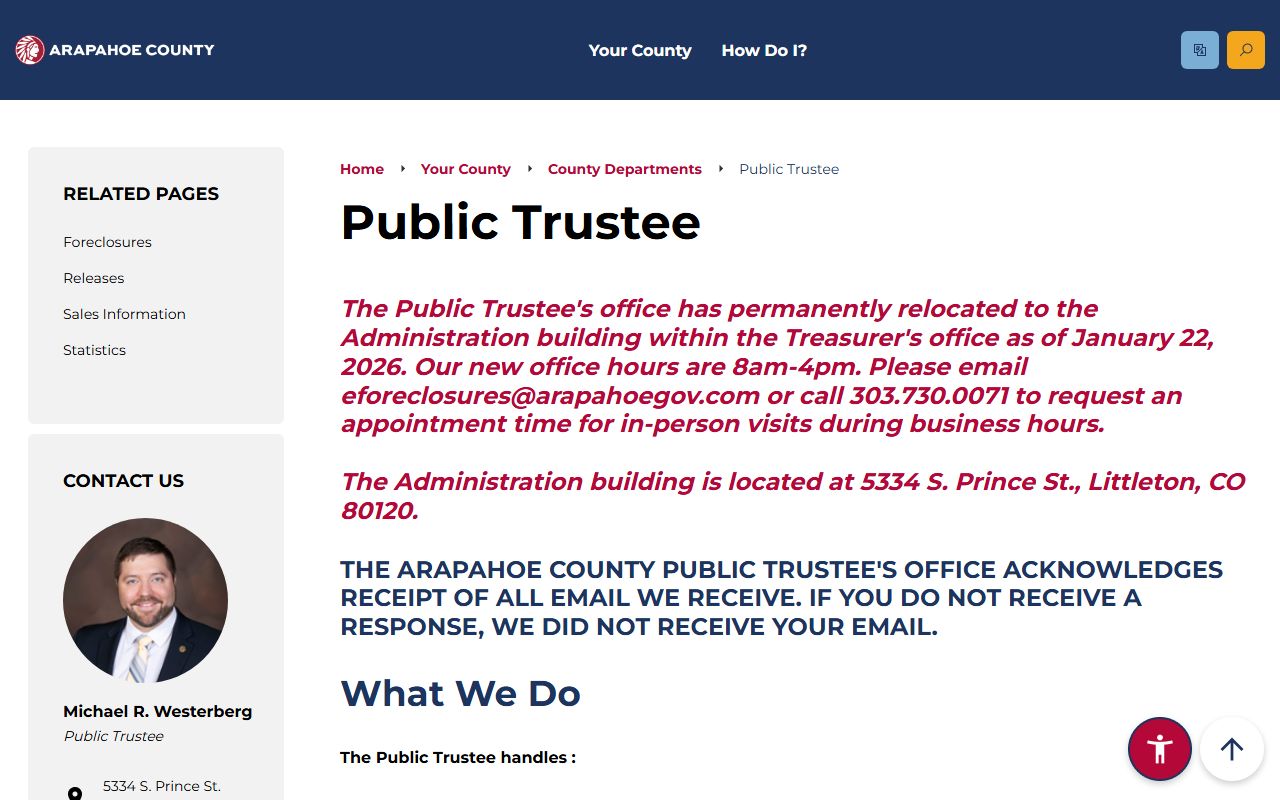
This page explains the Public Trustee's role in foreclosure sales and how overbid funds work. If you think you are owed money from a foreclosure, start here before moving to the state system.
State Unclaimed Property Database
Most unclaimed money in Arapahoe County is in the state's Great Colorado Payback program. This includes bank accounts left behind when you move, uncashed paycheck or refund checks, forgotten utility deposits, and insurance benefits that were never claimed. Colorado law requires businesses to turn these over to the state after a dormancy period.
The Great Colorado Payback database is free to search. No one should charge you to look for your property. You can search as many times as you want. Results show the property type, approximate amount, and the city where it was last held.

The state's official unclaimed property site handles all searches and claims for Colorado. Enter your name to see if any funds are waiting. The site also provides information about how the program works and what you need to file a claim.
How Property Becomes Unclaimed
An account becomes dormant when there is no owner contact or activity for a set time. For most bank accounts, this is three years. Payroll checks and wages are held for one year. Utility deposits and refunds are held for one year. Insurance proceeds have a longer period, often five years or more depending on the type of policy.
Before sending property to the state, the holder must try to contact you. They send letters to your last known address. If mail comes back or you do not respond, they file a report with the state and turn over the funds. The state then takes custody and lists the property in the public database.
You never lose the right to claim your property in Colorado. There is no statute of limitations. Even if decades have passed, you can still file a claim. The state holds the funds in perpetuity until the rightful owner or heir comes forward.
Searching Effectively
Use your full legal name when searching. Try variations like first name only, first and last name, or first name with middle initial. Some properties are listed under a business name if that is how the account was held. Search for any businesses you have owned or worked for.
Look at the location listed with each result. Arapahoe County has many cities. If you lived in Aurora, Centennial, Littleton, Englewood, or Greenwood Village, focus on properties from those cities. Some listings may show neighboring counties if you banked or worked there.
Try searching for deceased family members too. If a parent or spouse had unclaimed property, you may be able to claim it as an heir. The claim process requires proof of your relationship and their death, but the money is still available.
Filing a Claim
When you find property in your name, click on it to start a claim. The online form collects your current contact information and asks for proof of identity. A driver's license or state ID usually works. You may need to show you lived at the old address listed. An old utility bill, bank statement, or tax document can prove this.
The state reviews your claim and may ask for more documents. They want to verify you are the rightful owner. This protects against fraud. Small claims often require less documentation. Larger amounts need more proof. Follow the instructions in any letters or emails from the state treasurer's office.
Once approved, you receive payment by check or direct deposit. Most people get a check mailed to their current address. If you prefer direct deposit, you provide your bank account information on the claim form. There is no fee for either method. The state does not charge to return your money.
Processing takes a few weeks for simple claims. Complex cases can take longer. You can check your claim status online using the confirmation number from your submission. If the state needs more information, they contact you by mail or email.
Types of Unclaimed Property
Bank accounts are the most common type. You closed an account but left a small balance. Or you moved and forgot to update your address. The bank held the funds, tried to reach you, and finally sent the money to the state. Both checking and savings accounts end up this way.
Uncashed checks are another major category. Payroll checks from old employers, tax refunds you never received, insurance claim payments, and rebate checks all become unclaimed if not cashed within a certain time. The issuer holds them briefly then reports them to the state.
Utility and rental deposits are frequently unclaimed. You move out and expect a refund. The company sends it to your old address. You never get it. After the holding period, the deposit goes to the state. This includes electric, gas, water, cable, and security deposits from landlords.
Other types include stock dividends, life insurance benefits, safe deposit box contents, trust distributions, and court settlements. Anything of value can become unclaimed property if the owner cannot be found. The state holds all of it in the same system.
County Resources
Arapahoe County is one of the most populous counties in Colorado. Many residents may not know about unclaimed funds. The county website does not host a local search, but it links to state resources. You can find general information on the Arapahoe County homepage.
This site provides access to county services and elected officials. For unclaimed property, you will still use the state system. The county refers all such inquiries to the State Treasurer.
The Arapahoe County overbid information page explains how to claim excess funds from foreclosure sales. This is separate from the state unclaimed property program but serves a similar purpose. If you lost property to foreclosure, check this page first.
The Colorado Department of Property Taxation page for Arapahoe County has details about property taxes and assessments. It does not cover unclaimed funds but is useful for understanding local tax issues.
Avoiding Scams
Scammers target people with unclaimed property. They send official-looking letters claiming you have money waiting. Then they ask for a fee to help you claim it. Do not pay. The state does not charge to search or claim property. You can do it yourself for free.
Some legitimate companies offer claim services for a percentage of your recovery. This is legal, but you do not need their help. The process is simple and well explained on the state website. If you do hire someone, read the contract carefully. Make sure the fee is reasonable and only paid after you get your money.
Never give your Social Security number or bank details to someone who contacts you first. The state will ask for this information when you file a claim, but they do not make unsolicited calls. Verify everything through the official website before providing personal data.
If an offer sounds too good to be true, it probably is. Real unclaimed property does not come with urgent deadlines or pressure tactics. You have forever to claim it. Take your time and check things out.
Nearby Counties
Arapahoe County borders several other counties. Denver County is to the west. Adams County is to the north. Douglas County is to the south. If you lived or worked in these areas, search for property there too. The state database covers all Colorado counties, so one search shows everything listed under your name.
Many people move between these counties without realizing they left money behind. An old bank account in Denver, a utility deposit in Douglas County, or an uncashed paycheck in Adams County all show up in the same state database. Check the address on each listing to see where it came from.