
Boulder County Unclaimed Money Lookup
Boulder County residents search for unclaimed money through Colorado's Great Colorado Payback program run by the State Treasurer. The county treasurer, Paul Weissmann, manages property tax collection but directs all unclaimed property inquiries to the state database. People in Boulder, Longmont, Lafayette, and Louisville can find forgotten bank accounts, uncashed checks, and utility deposits in this statewide system. The database is free to search and updated regularly as businesses report new unclaimed property from across the county.
County Treasurer Office
The Boulder County Treasurer is Paul Weissmann. The main office is at 2045 13th St, Boulder, CO 80302. The mailing address is PO Box 471, Boulder, CO 80306. Call 303-441-3520 with questions about property taxes or to reach the office. Fax is 303-441-3598.
The treasurer also has satellite offices. The Longmont office is at 515 Coffman St, Suite 113, open Mondays only. The Lafayette office is at 1376 Miners Dr, Unit 105, open Tuesdays only. Main office hours are Monday through Friday, 8:00 AM to 4:30 PM.
This office handles property tax collection, tax lien sales, and related duties. Unclaimed property goes to the state after the county's holding period expires. The treasurer can explain how local tax sales work but cannot help with state unclaimed property claims.
The Boulder County Treasurer website provides information about tax payments and services. It links to the state unclaimed property program for residents who want to search for funds.
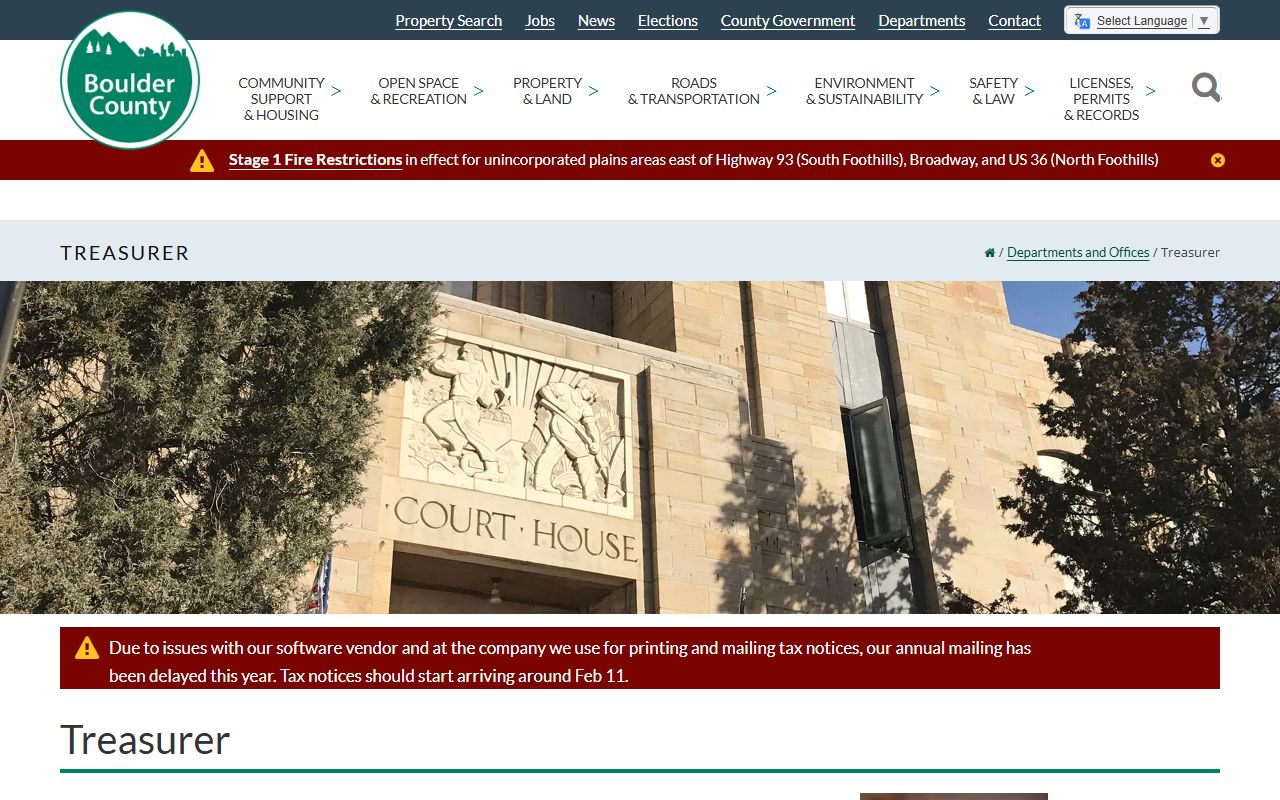
This page offers details about property tax bills, payment options, and contact information. For unclaimed money searches, use the state database.
State Unclaimed Property Program
Colorado uses a centralized system for unclaimed property. All counties report to the State Treasurer. The Great Colorado Payback program manages these funds. This includes money from Boulder County businesses, banks, utilities, and other sources. Once property becomes unclaimed, it goes to the state and stays there until the owner claims it.
The Great Colorado Payback database is free to search any time. Enter your name and see if you have property waiting. The system shows the type of property, city, and approximate amount. You can file a claim online if you find a match.
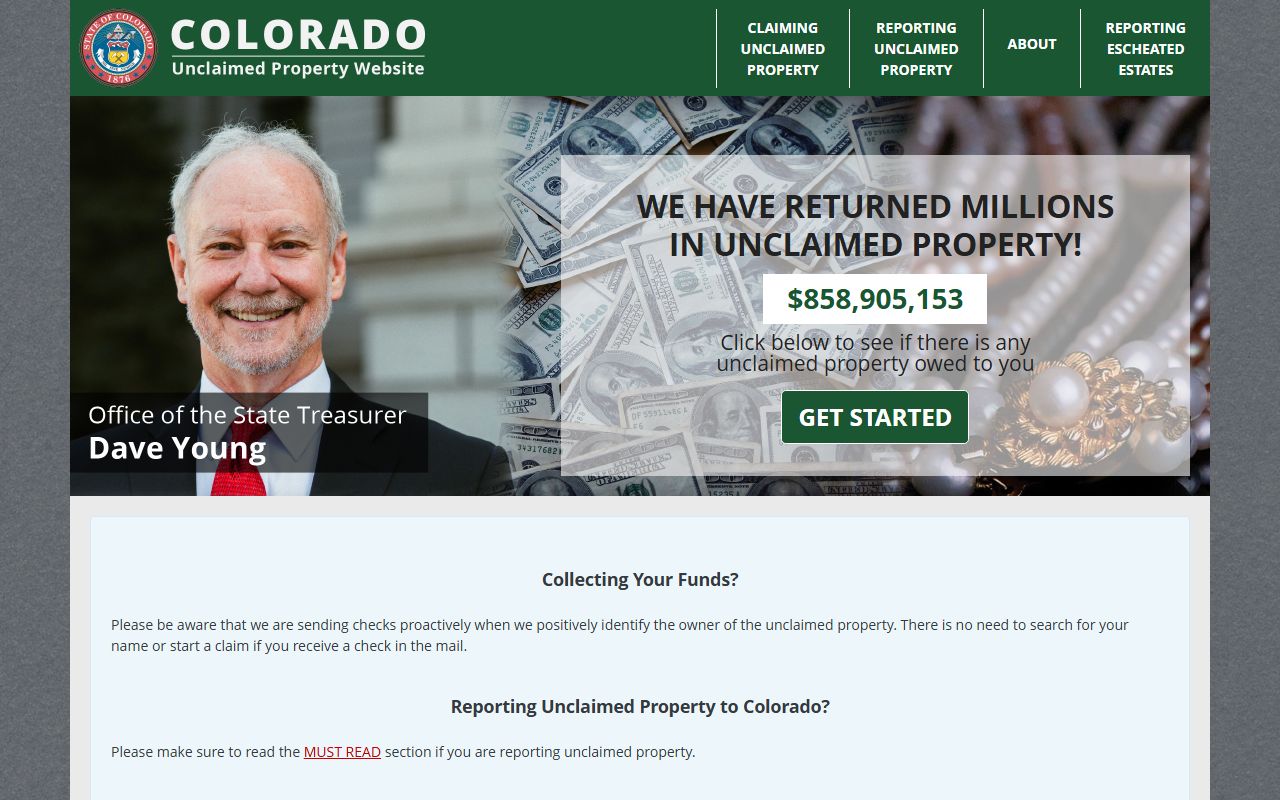
The state's official unclaimed money portal handles searches and claims for all Colorado counties. This is the main resource for finding funds held by the state.
How Funds Become Unclaimed
Most unclaimed money starts as an active account or asset. You have a bank account in Boulder. You graduate from CU and move away. The bank sends statements to your old address. After three years of no contact, the account becomes dormant. The bank must report it to the state and turn over the balance.
Businesses follow similar rules. An employer sends a final paycheck. You do not cash it. After one year, the employer reports it as unclaimed wages. The state takes custody and lists it in the database. You can claim it later with no time limit.
Utility deposits are another common source. You close an account with Xcel or the city. A refund check goes to your old address. You never get it. After a year, the utility sends the deposit to the state. This applies to electric, gas, water, and cable services.
Insurance policies can create unclaimed property when beneficiaries do not know about them. A policy pays out, but the company cannot find the heir. The benefit goes to the state after several years. The rightful person can still claim it decades later.
Searching Effectively
Start with your full legal name. If nothing appears, try variations. Use first and last name without middle name. Try your middle initial or full middle name. Some records list maiden names or nicknames. Search all versions to find everything.
Look at the city listed for each property. Boulder County has many cities and towns. Properties might show Boulder, Longmont, Lafayette, Louisville, Broomfield, Erie, Superior, or other locations. Focus on places you lived or worked. Some might show neighboring counties if you banked there.
Business owners should search company names. Vendor payments, customer refunds, and utility deposits for businesses all become unclaimed property. If you ran a business in Boulder County, search for that business name. Try both current and old names if the business changed.
Students who attended CU Boulder should search too. You might have a deposit refund, scholarship remainder, or other funds from the university. These can become unclaimed if you moved and did not update your address.
Filing Your Claim
When you find property, click on it to start a claim. The online form asks for your current contact information. You need proof of identity like a driver's license or state ID. Upload a scan or photo with your claim.
Some claims need proof you lived at the address in the database. An old utility bill, bank statement, or lease agreement can show this. The state verifies ownership before releasing funds. They may ask for more documents if needed.
Small amounts usually require less documentation. Large claims get more scrutiny. Follow the form instructions carefully. If you have questions, call 303-894-2443 and speak with state treasurer staff. They explain what documents you need.
Once approved, you get paid by check or direct deposit. Most people receive a check by mail. Direct deposit is faster but requires your bank account number. There is no fee for either method. The state does not charge to return your property.
Types of Property
Bank accounts are the most common unclaimed property. Checking, savings, and CDs all become dormant after three years of no activity. The bank sends the balance to the state. Boulder County has many financial institutions, so there are many potential unclaimed accounts.
Uncashed checks include payroll, tax refunds, insurance payments, and rebates. If you do not cash or deposit a check, it becomes stale. The issuer reports it to the state after the holding period. You can still claim the value later.
Security deposits from landlords are common in Boulder County. The rental market is large. If you moved and did not get your deposit back, check the state database. Your landlord may have sent it to the state as unclaimed property.
Other types include stock dividends, safe deposit box contents, court settlements, and trust funds. Anything of value can be unclaimed. The state holds all types in one system.
The Boulder County tax information page explains how property taxes work. This helps with tax questions but does not cover unclaimed money.
You can also use the Boulder County online tax system to look up and pay property taxes. This is separate from unclaimed property searches.
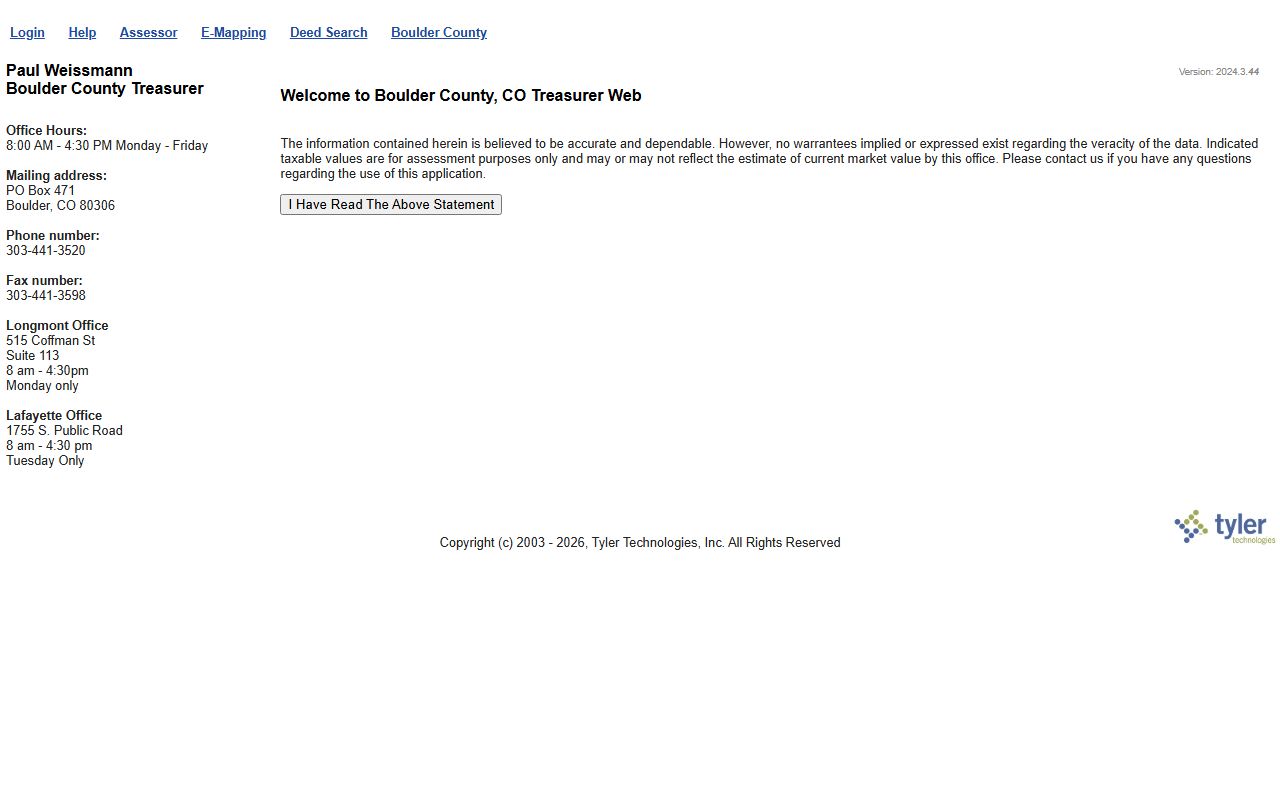
This system lets you search for property tax bills and make payments. It does not include unclaimed property. For that, use the state database.
Legal Framework
Colorado follows the Uniform Unclaimed Property Act. This law defines dormancy periods for different types of property. It also sets rules for how businesses report property and how the state manages it. Owners retain the right to claim their property forever. There is no deadline.
Holders must try to contact owners before reporting to the state. This includes sending letters to the last known address. If the owner does not respond, the holder files a report and sends the funds. The state lists the property in the public database.
Avoiding Scams
Scammers target Boulder County residents with unclaimed property schemes. They send letters or make calls claiming you have money waiting. Then they ask for a fee to help you claim it. Do not pay. The state does not charge to search or file claims. You can do it yourself for free.
Some companies offer claim services for a percentage of recovered funds. This is legal but often unnecessary. The process is straightforward. Most people do not need help. If you use such a service, read the contract carefully. Make sure the fee is reasonable and only charged after you get your money.
Never give personal information to someone who contacts you first. The state will ask for documents when you file a claim, but they do not make cold calls. Verify everything through the official website before sharing details.
Local Resources
Boulder County has many resources for residents. Public libraries offer computer access if you need help searching online. Library staff cannot assist with claims but can point you to the website. The Boulder Public Library and Longmont Public Library are both options.
If you need help with a complex claim, consider consulting an attorney. Most claims are simple and do not require legal help. Use common sense and follow the instructions on the state website.
The Colorado Department of Property Taxation page for Boulder County provides property tax information. This helps with understanding local taxes but not unclaimed property.
Nearby Counties
Boulder County borders several other counties. Weld County is to the north and east. Broomfield County is to the south. Jefferson County is to the southwest. If you lived or worked in these areas, search for property there too. The state database covers all counties, so one search shows everything under your name.
Many people move between Boulder County and Denver metro counties for work or school. You might have accounts in multiple counties. Check the address on each result to see where the property was held. This helps identify what belongs to you.