
Las Animas County Unclaimed Property
Las Animas County unclaimed money is managed through the State of Colorado's Great Colorado Payback program. These funds include old bank accounts, uncashed checks, utility deposits, insurance payouts, and more. You can search for free and file claims at no cost. Many residents have money waiting for them and do not know it. A simple search could reveal funds you forgot about or never knew existed. The process takes just a few minutes. Check now to see if you have unclaimed property waiting in Las Animas County.
Great Colorado Payback Program
The State of Colorado operates the Great Colorado Payback program for all unclaimed property. This centralized system holds funds from every county in the state, including Las Animas County. The State Treasurer's office manages billions of dollars waiting for owners to claim them. There is no time limit on claims. Even funds from decades ago can still be recovered.
To search, visit colorado.findyourunclaimedproperty.com. Enter your name in the search box and hit search. The system will display any matches with your name. Each result shows the amount, the holder who reported it, and the year it was turned over to the state. Click on any match to see more details and start a claim.
The claim process is completely free. Never pay anyone who offers to find money for you. The state provides all necessary tools at no charge. After you file a claim, the state reviews your documentation. If approved, they mail a check to your address. Most claims are processed within a few weeks, though some complex cases may take longer.
Las Animas County Treasurer Office
Las Animas County does not maintain a separate unclaimed property program. All unclaimed funds are transferred to the state database after the required holding period. The county treasurer's office handles property taxes and other local financial matters. For unclaimed property inquiries, they will direct you to the state system.
The Las Animas County Treasurer office is located at 200 E 1st St, Trinidad, CO 81082. You can reach them by phone at 719-846-3314. Visit https://lasanimascounty.net/ for information about county services and departments. The treasurer can assist with property tax questions and other county financial issues, but unclaimed property claims must be filed through the state database.
Visit the DPT Locality Page for more information about Las Animas County resources.
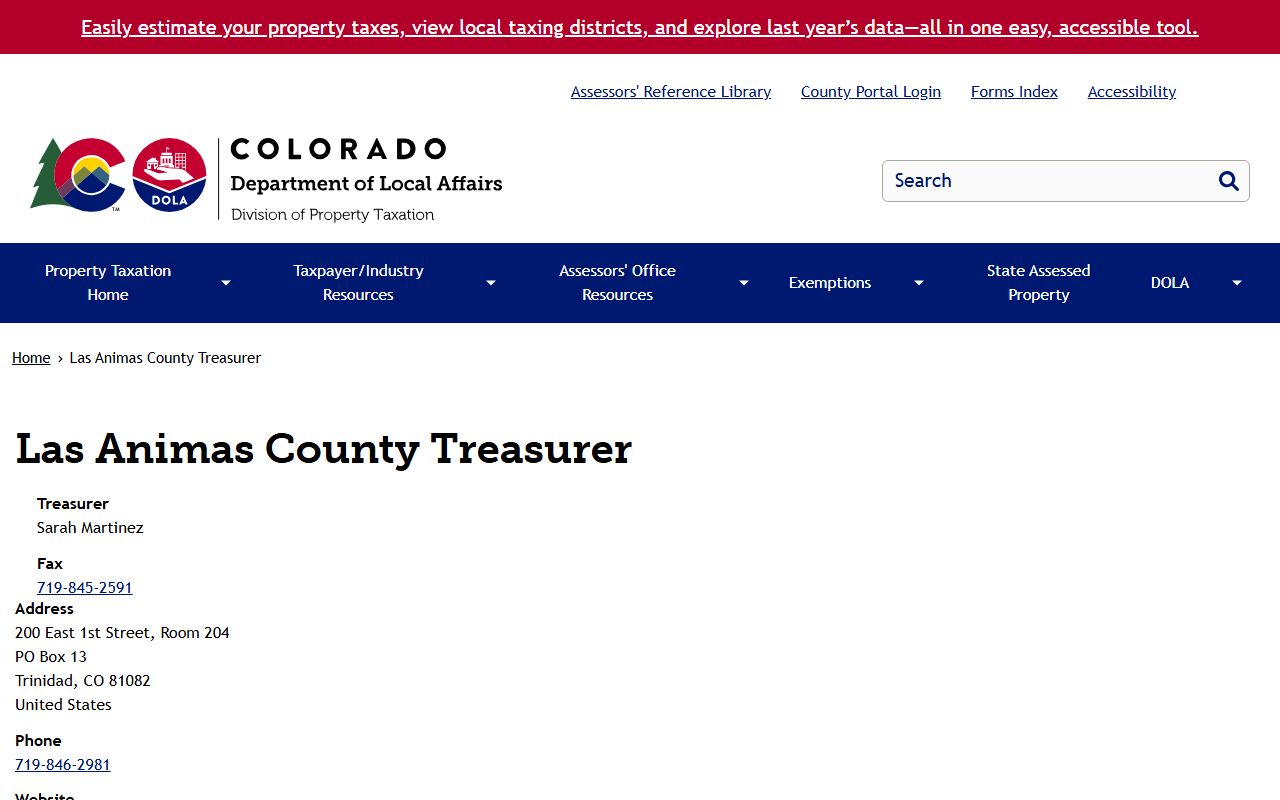
This page provides contact details and links to county services and financial resources.
Types of Unclaimed Property
Unclaimed property originates from many sources. Banks are the most common holder of unclaimed funds. When you close an account and leave a small balance, or when an account goes dormant, the bank eventually sends the money to the state. This happens more frequently than most people realize, especially when someone moves and loses track of old accounts.
Utility companies report unclaimed deposits regularly. When you cancel service, the company may owe you a deposit refund. If they cannot locate you at your new address, the deposit goes to the state. Insurance companies also report significant amounts of unclaimed property. This includes uncashed benefit checks, policy proceeds, and premium refunds from life, health, and property insurance.
Employers must turn over uncashed paychecks after a certain period. If you leave a job and do not collect your final check, it becomes unclaimed property. Businesses report uncashed vendor payments, customer refunds, and gift card balances. Even government agencies send funds to the state, including tax refunds, court settlements, and overpayments.
Stock dividends, mutual fund distributions, and brokerage accounts also generate unclaimed property. When a company cannot locate a shareholder, they report the funds to the state. The variety of sources means almost anyone could have unclaimed property. Regular searches are recommended because new property is added to the database constantly.
Filing Your Claim
Start by searching the state database thoroughly. Enter your full legal name, but also try variations like nicknames, middle initials, and maiden names. The system might list property under a name you no longer use regularly. When you find a match, click on it to review the details. Verify that it actually belongs to you by checking the holder name and approximate date.
To file a claim, you will need to create an account on the state website. Use a valid email address because the state will communicate with you through email about your claim status. Once logged in, select the property you want to claim and follow the prompts. The system will guide you through each step.
Document requirements vary based on the claim amount and type. For most claims, you will need a government-issued photo ID such as a driver's license or passport. You will also need proof of your current address, which can be a utility bill, bank statement, or lease agreement dated within the last sixty days. For larger claims, additional documentation may be required.
If you are claiming property on behalf of a deceased relative, you will need to provide a death certificate and proof that you are the legal heir. This might include a will, probate documents, or court orders establishing your right to the property. The state provides detailed instructions for each situation. If you need help, contact the State Treasurer's office directly. They offer free assistance and can answer questions about the claim process.
Why Funds Go Unclaimed
People lose track of money for countless reasons. Moving without updating your address with every company is a common cause. A check or statement gets sent to your old address and never reaches you. You might close a bank account thinking the balance is zero, when actually a few dollars or interest remained. Small amounts add up over time and eventually get reported to the state.
Busy schedules cause checks to go uncashed. You receive a refund check or payroll check and set it aside, planning to deposit it later. Life gets hectic and you forget about it. The check expires and the company turns the funds over to the state. This happens frequently with tax refunds, insurance claims, and final paychecks from jobs.
Inheritance is another major source of unclaimed property. A parent or grandparent passes away and the family does not know about all their accounts. An old savings account, life insurance policy, or stock certificate sits forgotten. Years pass and the property ends up in the state database. Heirs can still claim these funds if they search and provide proper documentation.
Business closures also generate unclaimed property. When a company shuts down, former employees may never receive final paychecks. Customers might not learn about refunds they are owed. Vendors lose track of payments. All this money eventually goes to the state for safekeeping.
The important thing to remember is that the state holds this money indefinitely. There is no statute of limitations. You can claim property from ten, twenty, or even fifty years ago. The state wants to return the money to rightful owners. You just need to search and file a claim.
Search Strategies
Effective searching requires trying multiple name variations. Enter your full legal name exactly as it appears on official documents. Then try different combinations. Use your first and middle initials. Try nicknames you have used. If you changed your name through marriage or legal proceedings, search under your former name as well. Property might be listed under any name you have ever used.
Do not forget to search for relatives. Parents, grandparents, siblings, and other family members might have unclaimed property. If they are deceased, you could be entitled to claim it as an heir. Search for their names using the same strategy of trying multiple variations. The effort could uncover substantial sums.
If you have ever owned a business, search under business names as well. Sole proprietorships, partnerships, and corporations can all have unclaimed property. Vendor refunds, customer deposits, and other business funds end up in the state database. Even if the business closed years ago, the funds might still be there waiting.
Make searching a regular habit. New property is added to the database monthly as companies report dormant accounts and uncashed checks. A search today might show nothing, but a search six months from now could reveal new property. Set a calendar reminder to search once or twice a year. It only takes a few minutes and could result in found money.
Avoiding Scams and Fraud
Be extremely cautious of unsolicited contact about unclaimed money. Legitimate notices come from the State Treasurer's office, not private companies. If you receive a letter, email, or phone call from someone claiming they found money in your name, verify it independently. Go directly to the state website and search for yourself. Do not follow links in emails or provide information to callers.
Never pay fees to search for or claim unclaimed property. The state database is completely free to search. Filing a claim is also free. No legitimate service charges fees for these basic functions. If someone asks for payment up front, it is a scam. Walk away and report it to authorities.
Protect your personal information carefully. Only enter sensitive data like your Social Security number or bank account details on the official state website. Check the URL carefully to ensure you are on the correct site. Bookmark the official site to avoid accidentally visiting fake sites designed to steal information. Never give personal information to someone who contacts you unsolicited, even if they claim to be from a government agency.
The State Treasurer's office will never ask you to wire money, send gift cards, or pay with cryptocurrency. These are all signs of scams. If you are unsure whether a contact is legitimate, hang up or delete the email and contact the State Treasurer's office directly using phone numbers from their official website.
County Resources
Visit the Las Animas County website for information about local government services. The site provides links to various county departments including the assessor, clerk, and treasurer. You can find contact information, office hours, and details about county programs and services.
The Colorado Department of Property Taxation locality page for Las Animas County Treasurer lists official contact information for the treasurer's office. This is helpful for property tax questions and other local financial matters. Remember that the treasurer cannot process unclaimed property claims, which must be filed through the state system.
For questions about unclaimed property, contact the State Treasurer's office directly. They have trained staff who can help with searches, answer questions about the claim process, and provide guidance on documentation requirements. Their assistance is free and available to all Colorado residents.