
Parker Unclaimed Property Database
Parker residents can find unclaimed money through the Great Colorado Payback program managed by the State Treasurer's Office. This Douglas County city may have thousands of dollars waiting for current and former residents. Old bank accounts, utility refunds, insurance payouts, uncashed wage checks, and other dormant assets all end up with the state when businesses cannot locate owners. You can search the full database at no cost and file claims for free to recover money that belongs to you.
Parker Quick Facts
Douglas County Oversees Parker
Parker is in Douglas County, which means local property and financial records go through county offices in Castle Rock. The Douglas County Treasurer's Office handles property tax collections and related matters. They do not hold the same types of unclaimed money that go to the state program, but they can help with questions about property tax refunds.
Since 2025, Parker and Douglas County must comply with House Bill 25-1224. This law repealed the local government exemption for unclaimed property. Cities and counties now must report dormant accounts to the Colorado State Treasurer's Office by November 1 each year. Any unclaimed money that Parker once held is now part of the statewide database.
| Town | Parker |
|---|---|
| Address | 20120 E Mainstreet, Parker, CO 80138 |
| Phone | 303-841-0353 |
| Website | www.parkeronline.org |
Contact the town of Parker if you have questions about utility deposits or local fees. Most towns hold deposits when you start water or sewer service. If you moved out and never received your deposit back, check the state database first. The town may have already sent it to the State Treasurer. For very recent deposits, call the town finance office.
How to Search for Your Money
Start at colorado.findyourunclaimedproperty.com to search the state database. Type your name in the search box and the system checks all records instantly. You can add "Parker" in the city field to narrow results, but you might miss property if the holder had a different address for you. Search broadly at first, then filter if needed.
Try different versions of your name. Search your full legal name first, then try nicknames, maiden names, or any other names you have used. Look up family members and deceased relatives. You can claim property for someone who died if you are their legal heir. Business owners should search their company name and any former names they operated under in Parker.
Each search result shows key information about the property. You see the property type, the holder who reported it, and an estimated value range. Click any result to view more details and start a claim. The online system guides you through the whole process. You do not need to hire anyone to help you. The state provides all tools and forms for free.
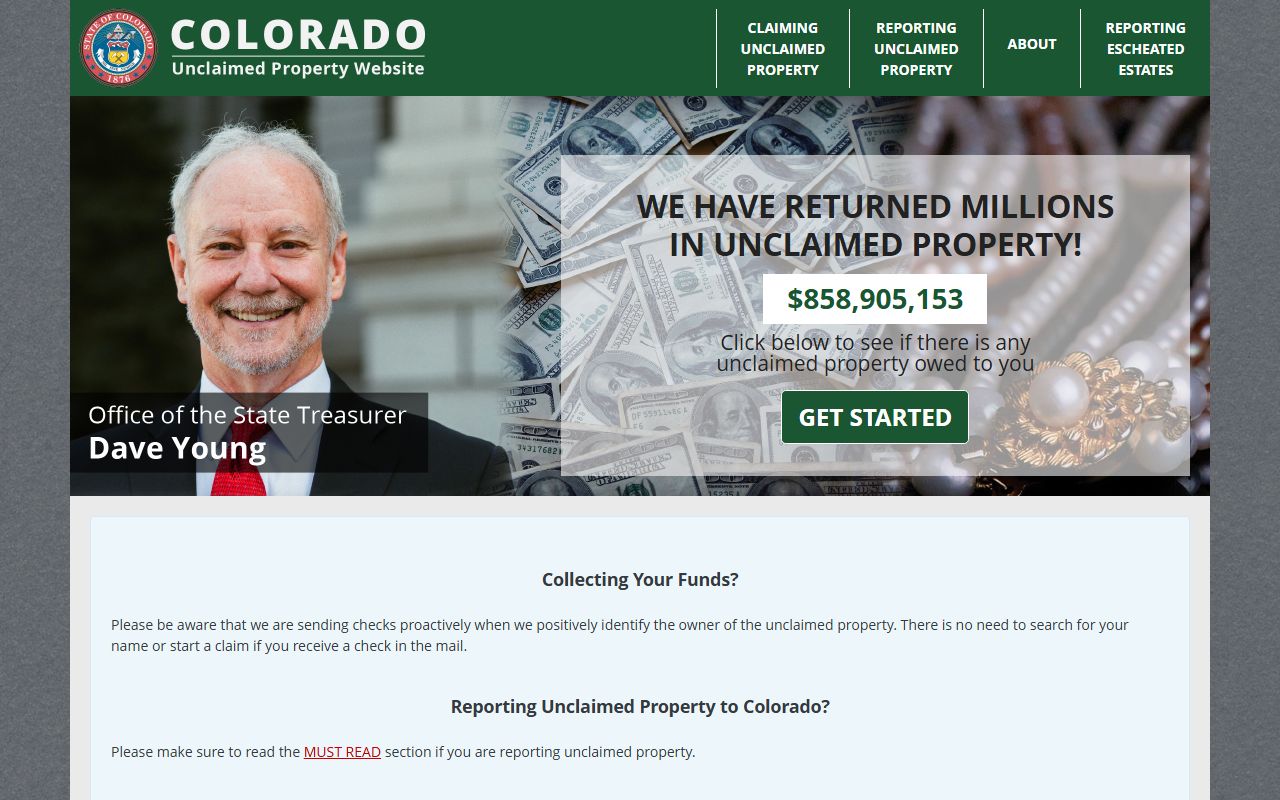
Colorado holds more than $2.5 billion in unclaimed property for over 16.5 million names. Every year the program processes more than 86,000 claims worth nearly $80 million. Since the program began, Colorado has returned over $858 million to rightful owners. Most claims resolve in about 11 days.
Types of Unclaimed Property
Many different assets become unclaimed property in Parker. Bank accounts left open when you moved to another city or state. Paychecks that you forgot to cash before leaving a job. Utility refunds from closed accounts. Insurance payments sent to old addresses. Safe deposit box contents. Stock dividends and bond interest. All of these end up with the state after businesses try to reach you and fail.
The law sets dormancy periods by property type. Wages and paychecks become presumed abandoned after one year of no owner contact. Bank accounts, utility deposits, and most other property types have a five-year dormancy period. Stocks and dividends have three years. Money orders stay with the issuer for seven years before transfer to the state.
Utility deposits are very common in Parker. If you rent an apartment or house and pay a deposit to turn on services, you should get that money back when you move out. Many people forget to claim it or move without leaving a forwarding address. The utility company holds the deposit for five years, then reports it to the state if they cannot find you.
Paychecks and wages also show up frequently in the database. If an employer could not deliver your last paycheck or you forgot to cash it, that money gets reported after one year. Direct deposit failures can also create unclaimed property. If the bank account on file is closed, the employer issues a paper check that may never get cashed.
Insurance proceeds appear often. Life insurance, health insurance refunds, and property insurance overpayments all get reported if the company cannot locate the owner. Sometimes people change addresses and forget to update their insurance company.
Filing a Claim for Parker Residents
Once you find property in your name, click the "Claim It" button to begin the process. The state asks for documents to prove your identity and address. A driver's license or state ID works for both requirements. You can also use a passport for identity proof. For address proof, use a utility bill, bank statement, or tax return that shows your name and a Parker address.
Claims over $1,000 require a notarized signature on the claim form. You can get documents notarized at banks, credit unions, or shipping stores in Parker. Some charge a small fee, but many do it free for customers. The notary must see you sign the form in person and check your photo ID.
Claims for deceased owners need additional documentation. The state requires a death certificate and proof that you are the legal heir. Acceptable documents include a will, probate order, or affidavit of heirship. These claims take longer to process because the state must verify the chain of ownership.
You can file your claim online or print the forms and mail them to the State Treasurer's Office at 200 E. Colfax Ave., Room 141, Denver, CO 80203. Online filing is faster because you can upload documents as images or PDFs. The state sends all payments by check. Simple claims often get paid in a few weeks.
Note: Colorado now sends proactive checks when they can identify owners without requiring a formal claim.
Watch Out for Scams
Some private companies contact people and claim they found unclaimed money in their name. They want you to sign a contract giving them a percentage of whatever they recover. You do not need these services. You can search and claim money yourself for free. The state never charges fees for any part of the process.
If someone calls or emails asking for upfront payment to access unclaimed funds, it is a scam. The state will never call you and ask for money to release funds. They will not ask for your bank account number or Social Security number over the phone. All legitimate claims go through the official website or by mail to the Denver office.
Real notices from the state come on official letterhead with a return address showing the Colorado State Treasurer's Office in Denver. If you receive an unexpected check from the State Treasurer and did not file a claim, it might be legitimate. Colorado started sending proactive payments. Call 303-866-6070 to verify any check before you cash it.
State Program Contact Information
The Great Colorado Payback program operates through the Division of Unclaimed Property within the Colorado State Treasurer's Office. State Treasurer Dave Young oversees the program, with Bianca Gardelli serving as the Unclaimed Property Director. The division maintains offices in Denver at 200 E. Colfax Ave., Room 141.
Staff answer questions by phone Monday through Thursday from 9:00 AM to 3:00 PM Mountain Time. Call 303-866-6070 if you are in the Denver metro area, or use the toll-free line at 800-825-2111. You can also email questions about claims to GreatCOPayback@state.co.us. Businesses with questions about holder reporting should email Holders@state.co.us.
The FAQ page answers most common questions about the program. Topics include what types of property get reported, why businesses turn over funds to the state, how long the claim process takes, and whether there are any fees.
Colorado also participates in MissingMoney.com, a free nationwide database that searches multiple states at once. This tool helps people who have lived in several states. If you lived in other states before moving to Parker, you should search those state databases too.
You can check your claim status online using the claim status tool. Enter your claim number and last name to see where your claim stands in the review process.
Colorado Unclaimed Property Law
Colorado unclaimed property law is found in the Colorado Revised Statutes Title 38, Article 13. The state adopted the Revised Uniform Unclaimed Property Act in 2019 through Senate Bill 19-088. This law took effect on July 1, 2020. It updated Colorado's framework to match modern standards.
The statute sets different dormancy periods for each type of property. Wages become abandoned after one year. Bank accounts and utility deposits have five years. Stocks and dividends have three years. Money orders remain with the issuer for seven years before transfer to the state.
Businesses must perform due diligence before reporting property to the state. They must send written notice to the last known address for any property worth $50 or more. The notice goes out between 60 and 120 days before the holder submits their annual report.
House Bill 25-1224 changed the rules for local governments in 2025. It repealed the exemption that previously allowed cities and counties to keep unclaimed funds. All local governments now must report dormant accounts by November 1 each year.